


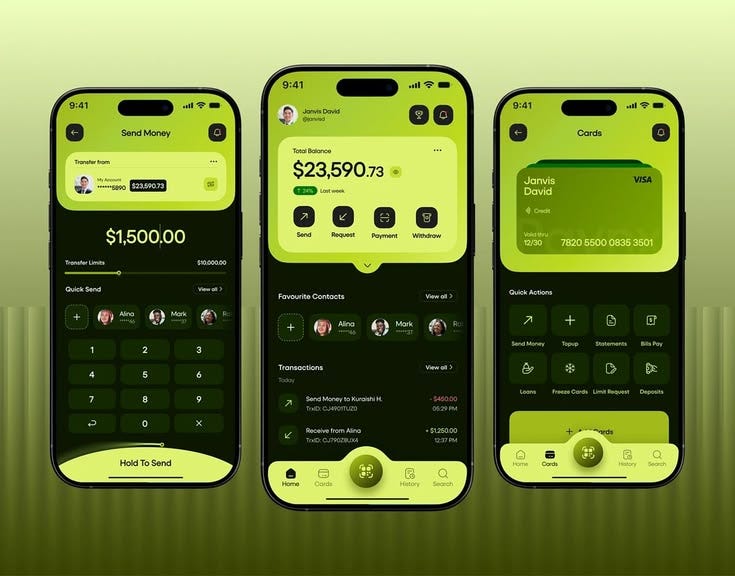
In Nigeria’s digital economy, friction has evolved beyond slow servers. Today, a mere gap in meaning causes a one-second hesitation; a cognitive delay that instantly triggers a 7% drop in conversions. With onboarding drop-off rates for financial apps now hemorrhaging between 63% and 85% of users, the primary culprit is what researchers call the “Patience Deficit.” Conditioned by historically unreliable networks, users instinctively assume a transaction has failed if a screen hangs for more than three seconds. If the UI text lacks absolute clarity in that critical window, they do not wait. They exit.
Cognitive friction occurs the exact moment a user pauses to wonder if a feature works as expected. Take the “Zero Glitch.” Because many apps fail to implement real-time input masking, 34% of reported financial loss incidents stem from users accidentally typing ₦100,000 instead of ₦10,000. But the most severe hazards are entirely symbolic. When a “Delete” prompt relies on mechanical translation, substituting Wanke (to wash with liquid) instead of the idiomatic Goge (to erase), users freeze. The literal command implies the physical destruction of their phone. Panic sets in, and they abandon the process at the final step.
This friction carries a massive financial penalty. Nielsen Norman Group data confirms that users read merely 20 to 28% of the words on a page; the rest of the time, they ruthlessly scan for color, shape, and spatial positioning. On a high-stress mobile banking confirmation screen, nobody reads the full pop-up text. They hunt for a green button or a familiar action verb and tap. However, if a button label is awkward or text-heavy, especially since Hausa translations are often 20% longer than their English counterparts, it shatters the visual scanning flow and forces the user to a halt.
Ignoring these visual-linguistic mismatches is corporate sabotage. While localizing checkout experiences can slash abandonment rates by up to 40%, the majority of Nigerian fintech apps still treat their Hausa interfaces as a post-launch afterthought, simply shoehorning last-minute translations into rigid English wireframes. For UX researchers and localization strategists, the aim is not aesthetic flair. The mandate is absolute, friction-free precision: dismantling the language barriers that transform a user’s clear commercial intent into fatal hesitation.